Understanding Microphone, Earpiece, and IHF Speaker Circuits in Mobile Phones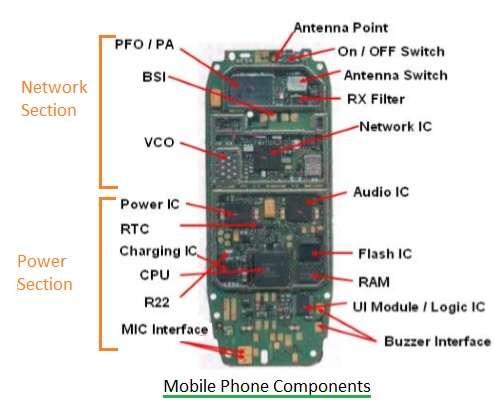

Audio components in a mobile phone are essential user-interface elements that allow sound to be captured, processed, and played back. The main audio parts include the microphone (mouthpiece), earpiece speaker, IHF speaker or buzzer, and the vibrator motor. All of these components are managed by a central audio codec circuit.
Mobile Phone Microphone (Mouthpiece)
The microphone, also known as the mouthpiece, is responsible for converting sound waves into electrical signals. When a user speaks into the phone, the microphone captures the sound and sends it to the audio codec for processing and transmission.
Microphone Circuit Design

In modern mobile phone designs, the microphone circuit is typically protected by an EMI (Electromagnetic Interference) filter. This filter prevents unwanted noise from entering the audio path before the signal reaches the audio codec.
The microphone signal usually travels through two lines: a positive (+) and a negative (–) line. After passing through the EMI filter, these lines are further stabilized using capacitors that remove unwanted DC voltage and clean the audio signal.
Common Microphone Circuit Issues
- No sound during calls
- Very low voice transmission
- Distorted or noisy audio
Earpiece Speaker Circuit
The earpiece speaker performs the opposite function of the microphone. It converts electrical signals from the audio codec into sound that the user hears during phone calls.
Signal Filtering in the Earpiece Circuit
To maintain audio clarity, the earpiece circuit often includes inductor coils. These components reduce radio-frequency interference that may cause buzzing, distortion, or sound saturation during calls.
IHF Speaker or Buzzer Circuit

The IHF (Integrated Hands-Free) speaker, also known as the buzzer or ringer speaker, is used for loud audio output such as ringtones, notifications, and media playback.
Similar to the earpiece, the IHF speaker circuit uses two signal lines—positive and negative—to deliver audio output. These lines are also filtered to ensure stable and clear sound performance.
Vibrator Motor in the Audio Circuit
Although the vibrator motor does not directly convert electrical signals into sound, it is still considered part of the audio system. The vibration it generates produces audible feedback, especially in silent or vibration modes.
Audio Codec Circuit and PCB Layout

All audio components—microphone, earpiece, IHF speaker, and vibrator motor—are connected to the audio codec circuit. On the printed circuit board (PCB), each component has separate signal paths, but all paths eventually lead back to the audio codec for processing and control.
Understanding the PCB Audio Layout
The PCB layout shown in diagrams is a simplified representation of how audio components are interconnected. While actual phone designs vary by manufacturer, the core audio signal routing principles remain the same across most mobile devices.
Conclusion
Understanding how microphone, earpiece, IHF speaker, and vibrator motor circuits work is essential for diagnosing audio-related issues in mobile phone repair. Since all these components rely on the audio codec circuit, a fault in one area can affect overall sound performance.
إرسال تعليق